UK and EU Tighten Steel Import Controls as Global Trade Protection Wave Intensifies
Overview
July 1, 2026, marked a turning point in global steel trade. The United Kingdom launched its most aggressive steel import restriction in decades, slashing tariff-free quota volumes by 60% and imposing a 50% duty on out-of-quota shipments. On the same day, the European Union activated a new safeguard regulation targeting subsidized and dumped steel imports. These measures join the United States' existing 50% Section 232 tariff, creating a synchronized trade barrier across three of the world's largest steel-consuming regions.
The timing is no coincidence. Global steel overcapacity is projected to reach 745 million metric tonnes by 2027, according to the OECD Steel Outlook 2026. China's steel exports surged to 131 million metric tons in 2025 despite a 6.2% decline in world steel exports overall. Western governments are now responding with coordinated protectionist measures that are fundamentally reshaping procurement strategies for importers, distributors, and manufacturers worldwide.
Key Developments
UK: Quotas Slashed by 60%, 50% Tariff on Excess Imports
The UK's new steel trade measure, published on April 2 and effective July 1, covers 20 product categories including hot-rolled sheets and strips (Category 1), metallic coated sheets (Category 4), organic coated sheets (Category 5), quarto plates (Category 7), rebars (Category 13), stainless bars (Category 14), hollow sections (Category 21), and welded tubes (Category 26).
The policy reduces overall quota volumes by 60% compared to the previous steel safeguard measure. Imports exceeding the quota face a 50% tariff calculated on the customs value of the goods. The quotas are allocated quarterly on a first-come, first-served basis, with country-specific allocations for major suppliers including the EU, India, South Korea, Vietnam, and Turkey. Unused quota from one quarter rolls over to the next, but not across quota years.
A transitional exemption applies: goods under contract before March 14, 2026, and imported between July 1 and September 30, 2026, are fully exempt from the 50% out-of-quota duty. The government cited the need to protect domestic steelmaking, which has seen UK crude steel production decline by more than 50% in the last decade, falling to 2.50 million tonnes in 2025.
The policy has drawn sharp criticism from downstream industries. Stephen Morley, president of the Confederation of British Metalforming, warned that "misguided quota reductions, compounded by the inevitable imposition of tariffs, have left metal stockists and manufacturers facing increasing commercial pressures, tighter margins and the prospect of job cuts across the supply chain."
EU: New Safeguard Regulation Targets Subsidized Imports
The European Commission's new regulation, which also entered application on July 1, aims to protect the EU steel sector from global overcapacity and trade distortions. The EU's apparent steel demand growth is forecast at just 0.4% for 2026, following a modest import-led rebound. Steel production in the EU remains near historic lows, and the new measures seek to prevent further erosion of domestic capacity.
United States: 50% Tariff Framework Expands
The US Department of Commerce continues to tighten its Section 232 tariff regime. A June 8 presidential proclamation expanded the temporarily-reduced 15% duty category to include agricultural equipment and HVAC systems. A separate June 8 revision also broadened the 85% domestic-content threshold for products to qualify as made "entirely" from American steel, aluminum, or copper. US hot-rolled coil prices stood at $1,201.50 per metric ton as of late May 2026 — 58% higher than when the current administration took office and more than double the Southeast Asian benchmark of $571 per metric ton.
US steel imports are down approximately 30% year-to-date in 2026, according to the American Iron and Steel Institute, while domestic capacity utilization has risen. However, employment in US iron and steel mills has remained essentially flat at 84,300 workers.
China: Export Prices Under Pressure
China's steel market is experiencing a summer downturn. Mysteel reported on July 7 that prices for major steel products — including rebar, square billet, and hot-rolled coil (HRC) — continued declining during the week of June 29 to July 3. China's HRC export prices have fallen for three consecutive weeks, reflecting weaker end-user demand during the traditional seasonal lull. Chinese mills' profitability rates remain under pressure, with excess supply weighing on the domestic market.
China's steel exports are losing momentum as trade barriers accumulate. Antidumping cases targeting Chinese steel rose to 17 in the first months of 2026, and Chinese semi-finished steel exports surged 182% in Q1 2026 as exporters shifted toward products facing fewer trade restrictions.
Industry Impact
Price Divergence Between Protected and Open Markets
The growing gap between protected Western markets and open Asian markets is one of the most significant structural shifts in the global steel trade. US HRC prices at approximately $1,200 per metric ton are more than double Southeast Asian prices. In China, HRC FOB prices from Tianjin port were assessed at $490 per metric ton as of July 3, 2026. This price divergence creates both risks and opportunities for global buyers who can navigate the complex tariff landscape.
Supply Chain Restructuring
Importers in the UK are already grappling with quota allocation uncertainty. The Construction Leadership Council's steel tariffs working group reported that uncertainty around quota availability triggered "panic buying" behavior ahead of July 1, increasing short-term demand and extending procurement lead times. Companies that accelerated purchases or adjusted supply arrangements now face the risk that their mitigation strategies may prove unnecessary if the government modifies the quota structure.
Downstream Cost Pressures
The tariffs are driving up input costs for construction, automotive, and manufacturing sectors. The US producer price index for iron and steel increased 10.4% between April 2025 and April 2026. Nonresidential construction spending in the US has been declining, partly due to higher material costs. In the UK, engineering firms producing specialist fasteners from corrosion-resistant stainless steel and high-strength alloys warn that the quotas encompass grades not currently manufactured domestically.
What It Means for Steel Buyers
Short-Term: Supply Uncertainty and Lead Time Risk
Buyers sourcing steel for delivery to the UK, EU, and US markets should expect extended lead times and potential supply disruptions as the new quota systems take effect. The transitional exemption period in the UK (through September 30) provides a brief window, but contracts signed after March 14, 2026, are fully exposed to the new tariff regime.
Medium-Term: Sourcing Diversification
With three major markets tightening import controls simultaneously, buyers need to diversify sourcing strategies. Countries with preferential trade agreements — including EU member states, South Korea, Japan, and certain Latin American suppliers — retain lower tariff rates under quota allocations. Vietnam has emerged as a significant supplier, receiving specific quota allocations in the UK's Category 4 (metallic coated sheets) at 174,367 tonnes annually.
Long-Term: Price Premium for Compliant Supply
The structural shift toward trade protection is likely to persist. The OECD projects global excess steelmaking capacity to reach 745 million metric tonnes by 2027, meaning the supply-demand imbalance that drives protectionist responses will not resolve quickly. Buyers who establish reliable, tariff-compliant supply chains now will gain a competitive advantage as the policy environment continues to tighten.
MESCO STEEL Insights
The current trade protection wave is not a short-term disruption — it is a structural realignment of the global steel supply chain. Three observations for industrial buyers:
1. Quality compliance is becoming a competitive moat.
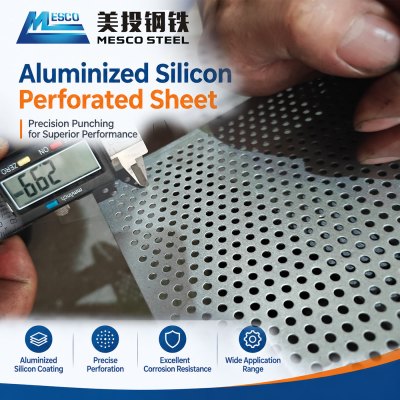
As tariffs raise the cost of commodity-grade steel, buyers are increasingly prioritizing higher-value products where performance justifies the premium. Galvanized steel, PPGI, aluminized steel, and ZAM steel — which make up a core part of MESCO STEEL's product portfolio — are seeing steady demand because they serve applications where coating quality and consistency directly affect end-product durability.
2. China remains a critical supply source, but the landscape is shifting.
Chinese steel exports are under pressure from antidumping cases, but China still accounts for the largest share of global steel production and export capacity. Buyers who work with established Chinese suppliers with strong compliance records and international certifications are better positioned to manage tariff risk than those relying on spot-market purchases.
3. Regional trade agreements matter more than ever.
Buyers in regions with free trade agreements or preferential quota access — including Southeast Asia, the Middle East, Africa, and Latin America — face fewer immediate trade barriers and may benefit from redirected supply as Chinese mills seek new markets.
Conclusion
The July 1, 2026, implementation of new UK and EU steel import restrictions, combined with the ongoing US tariff regime, represents the most coordinated global trade protection effort in the steel industry since the original Section 232 tariffs of 2018. With global overcapacity projected to worsen through 2027, further trade actions are likely.
For industrial buyers, the immediate priority is understanding how quota allocations, tariff classifications, and country-of-origin rules affect their specific product categories. For the broader steel market, the divergence between protected Western markets and open Asian markets is creating a two-tier pricing environment that will shape procurement decisions for years to come.
Looking for Reliable Steel Suppliers in China?
MESCO STEEL provides high-quality steel coils, steel plates, steel sheets, stainless steel, galvanized steel, PPGI, ZAM steel, aluminized steel and customized steel solutions for customers worldwide.
Website: https://www.mescogroup.com.cn
Email: mesco@mescogroup.com.cn
Sources