How Is Composite Cookware Steel Blank Made? The 4-Layer Tri-wall Structure Explained
How is the 4-layer Tri-wall composite cookware blank made?
Direct answer: the blank is produced by roll-bonding four metal layers into a single sheet before deep drawing: a 0.6 mm brushed stainless steel working surface, a 1.5 mm aluminum core for lateral heat spreading, a 0.4 mm copper layer for premium thermal response and appearance, and a 0.5 mm SS430 ferritic base that makes the pan induction-ready.
| Layer | Material / thickness | Function |
|---|---|---|
| 1 (interior) | 0.6 mm brushed stainless steel | Food-contact surface, easy cleaning, scratch-brushed finish |
| 2 (core) | 1.5 mm aluminum | Rapid lateral heat spreading — eliminates hot spots |
| 3 (outer) | 0.4 mm copper | Premium look and fast thermal response |
| 4 (base) | 0.5 mm SS430 ferritic stainless | Magnetic layer → works on induction cooktops |
Why clad instead of a single metal
Pure copper pans are expensive and hard to maintain; pure stainless heats unevenly; aluminum alone cannot be induction-heated. Bonding the four layers combines each metal's strength at a fraction of solid-copper cost.
Supply form
MESCO supplies the composite blank as circles or strips sized to your pressing tooling, under the Composite Steel Plate category, with consistent layer ratios lot-to-lot and mill test certificates for traceability.
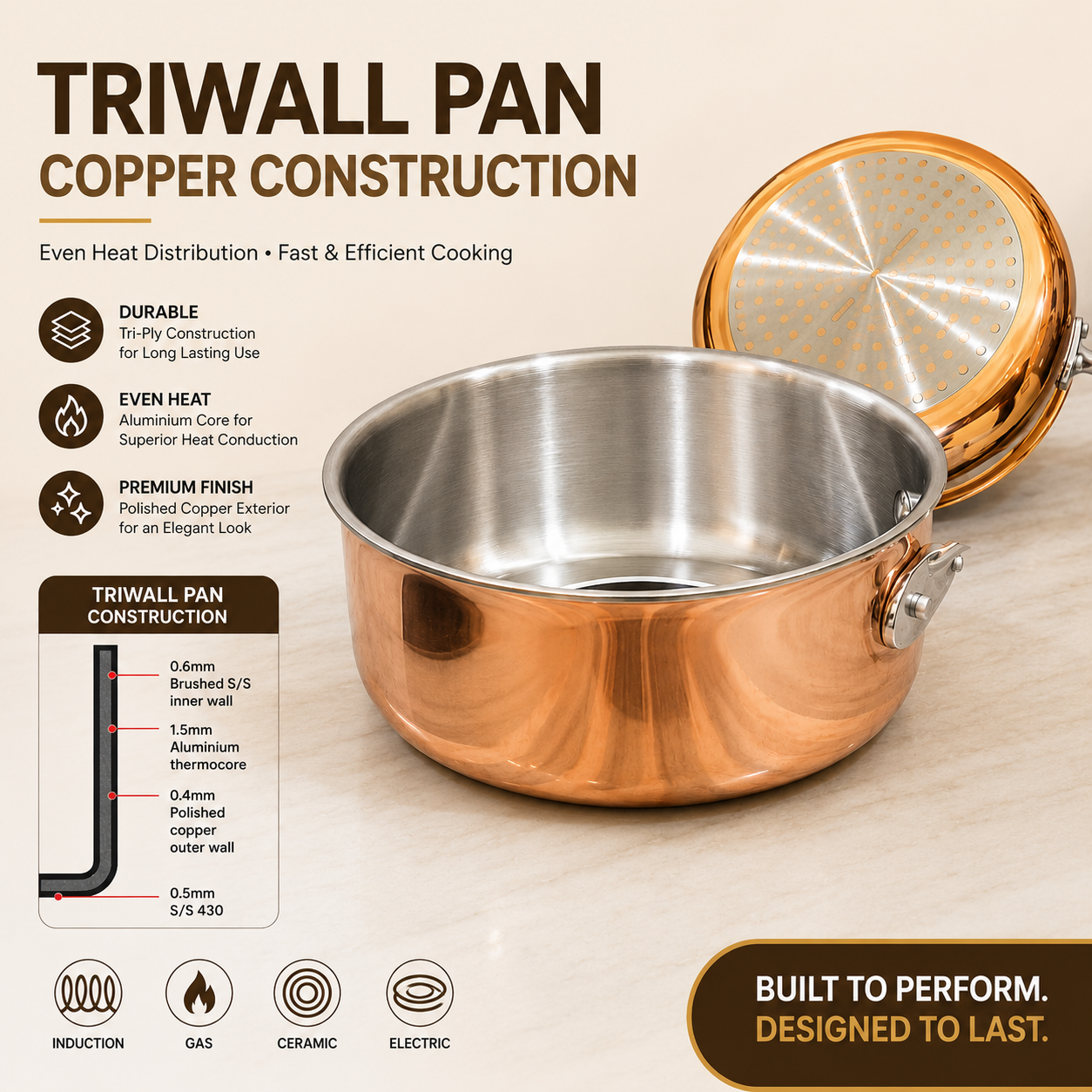
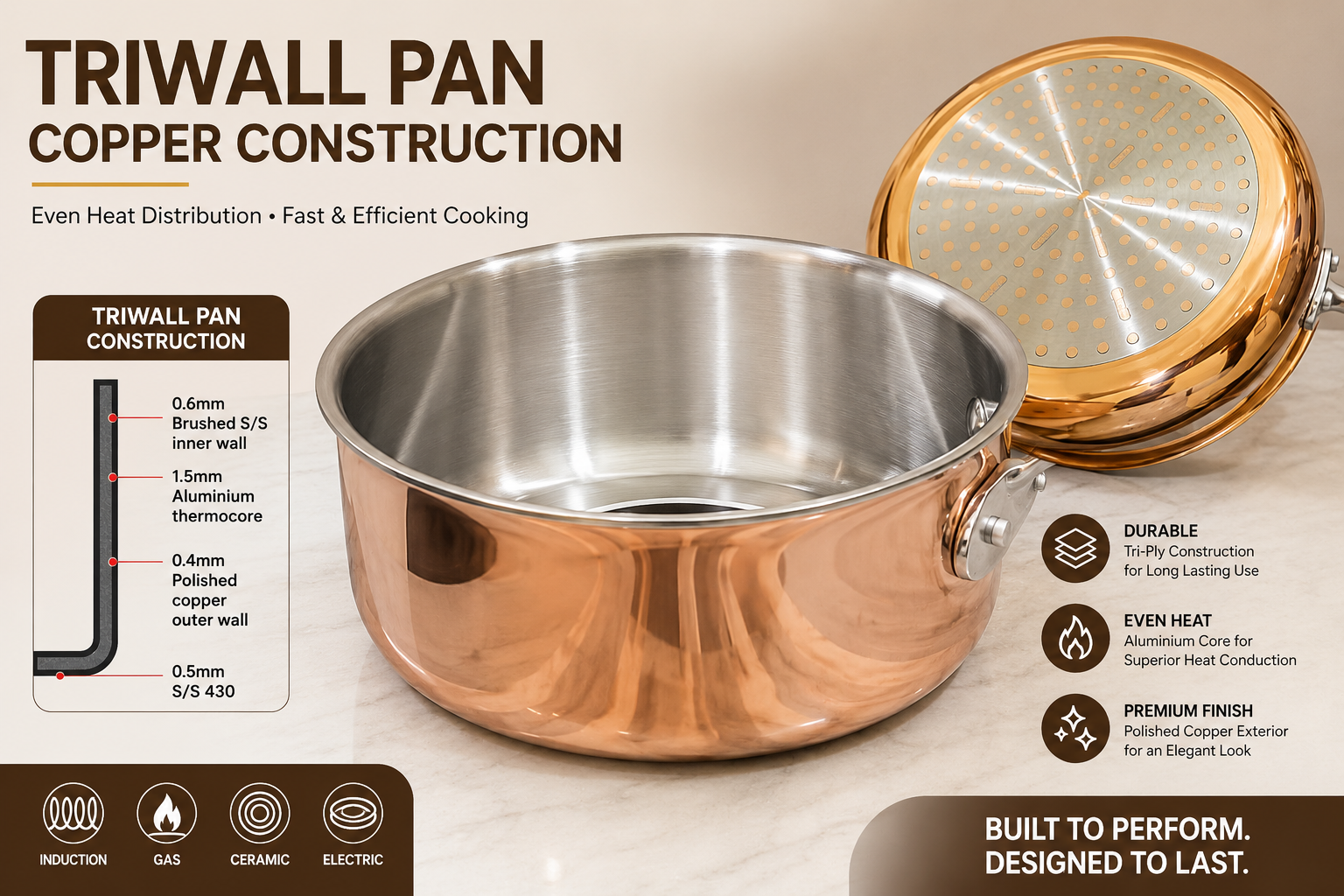
Specification snapshot: 0.6 mm brushed S/S + 1.5 mm Al + 0.4 mm Cu + 0.5 mm S/S 430.