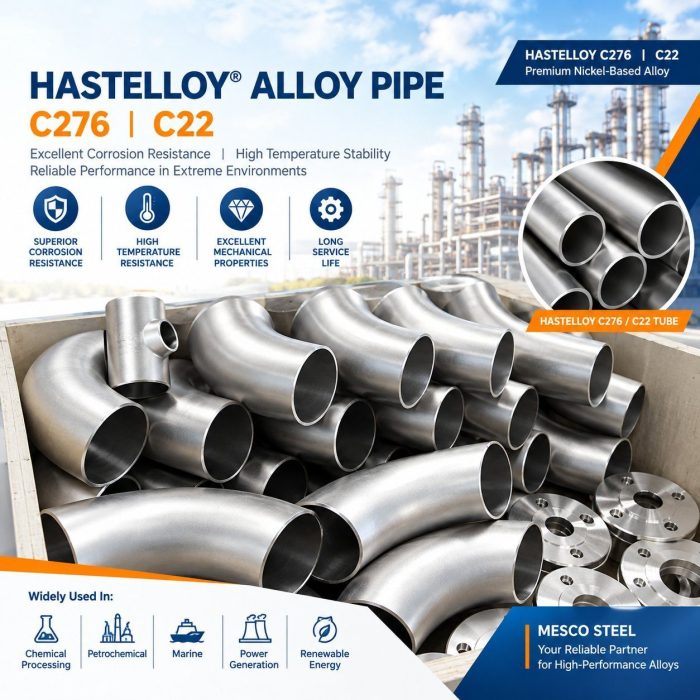
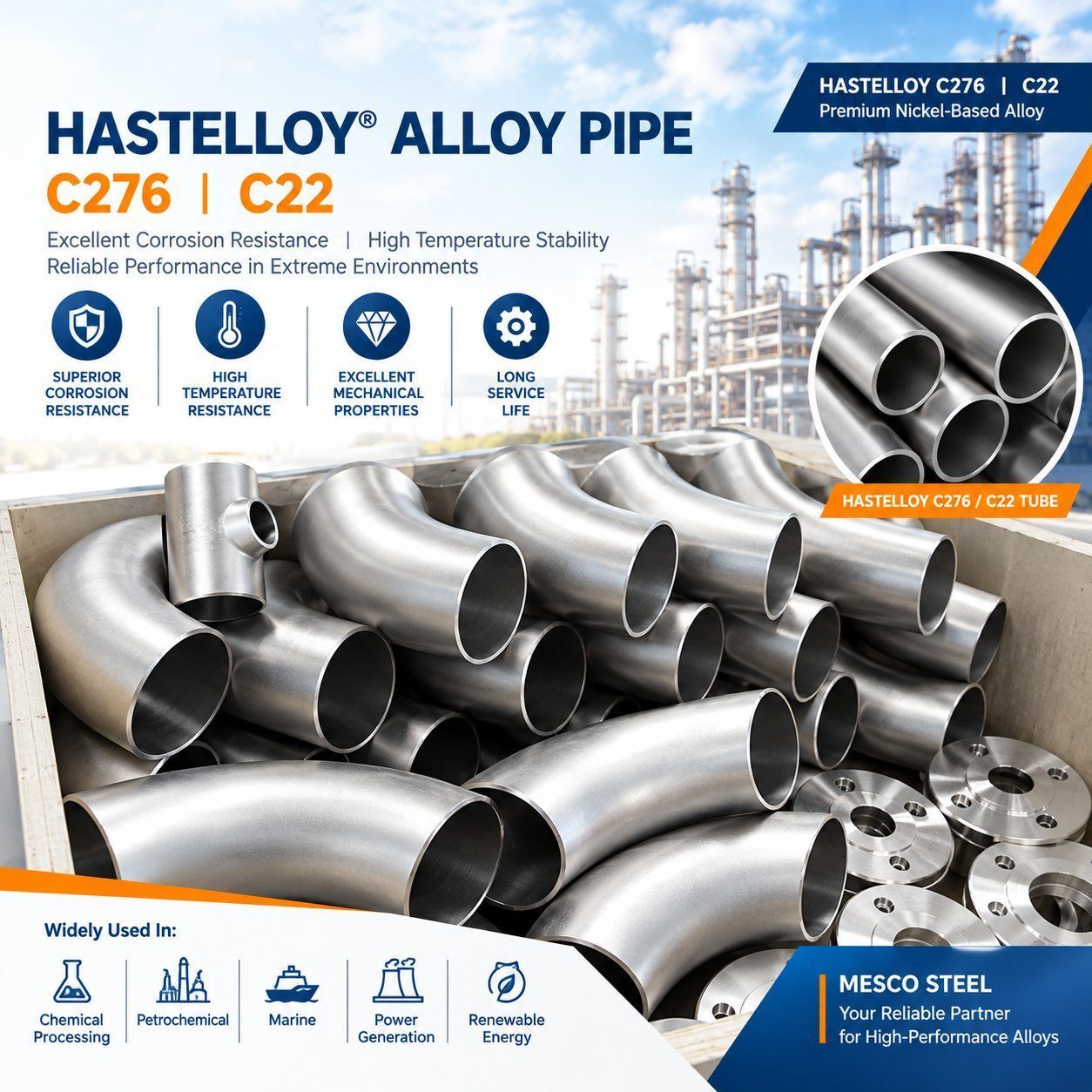
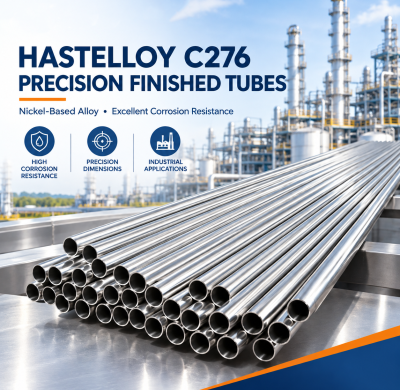
Alloy C-276 (UNS N10276) Plate, Tube, Bar & Fittings
A nickel–molybdenum–chromium superalloy with tungsten added, engineered for the corrosion conditions that defeat ordinary stainless steels. The very low carbon content keeps carbide precipitation out of the weld zone, so corrosion resistance survives welding without solution annealing.
Pitting & crevice corrosion resistance from 15.0–17.0% Mo combined with 14.5–16.5% Cr
As-welded corrosion resistance — carbon held to 0.01% max suppresses carbide precipitation in the heat-affected zone
One alloy, every product form — plate, seamless & welded tube, pipe, bar, forgings and fittings under the ASTM B366–B829 family, including NACE MR-0175 sour service
Overview
Alloy C-276 — widely referred to as Hastelloy C-276, UNS N10276 or Werkstoff Nr. 2.4819 — is one of the most versatile corrosion-resistant materials available to process industries today. Its nickel matrix gives it a toughness that tolerates thermal cycling and mechanical stress; the molybdenum and tungsten additions attack localized corrosion head-on; and the chromium rounds out protection in oxidizing media.
What makes the alloy genuinely practical for buyers, however, is what is not in it. With carbon limited to 0.01% maximum, Alloy C-276 components can be welded and put straight into corrosive service. That single metallurgical decision removes post-weld heat treatment from most fabrication routes — a direct saving in fabrication cost, lead time and distortion risk that purchasing teams can quantify on every project.
What Is Alloy C-276?
Alloy C-276 is a wrought, solid-solution–strengthened nickel alloy in the C family of the Hastelloy system. Four alloying elements do the work: nickel (balance) stabilizes the microstructure and resists chloride-induced stress corrosion cracking; molybdenum (15.0–17.0%) and tungsten (3.0–4.5%) deliver the exceptional resistance to localized attack in reducing media; chromium (14.5–16.5%) protects in oxidizing media such as wet chlorine and ferric salts.
The low carbon and silicon limits are deliberate. During welding, ordinary C-family alloys precipitate chromium-rich carbides and intermetallic phases in the heat-affected zone, and those precipitates are precisely where grain-boundary corrosion begins. By holding carbon at 0.01% max and silicon at 0.08% max, Alloy C-276 maintains its corrosion resistance in the as-welded condition — the property that makes it the default choice for field-erected chemical equipment.
Key Features
Localized Corrosion Defence
High molybdenum plus chromium and tungsten resist pitting and crevice corrosion in chloride-bearing acids, seawater brines and acidic condensates where 316L and duplex grades fail.
Reducing and Oxidizing Media
Performs in both wet chlorine, hypochlorite and ferric/curpic chlorides (oxidizing) and in hydrochloric, sulfuric and phosphoric acid streams (reducing) — a rare double coverage for one alloy.
As-Welded Service
Carbon at 0.01% max means no carbide precipitation in the weld HAZ, so most fabrications go into service without solution annealing after welding.
Sour Service Compliance
Listed against NACE MR-0175 / ISO 15156 for oil and gas equipment in H2S-bearing environments, supporting qualified procurement in upstream and gas treating duty.
Complete Product Family
Supplied as plate and sheet, seamless and welded tube and pipe, bar, forgings and butt-weld fittings — one material specification across the whole pressure envelope of a plant.
Fabrication Friendly
Good hot and cold formability, standard gas–tungsten and gas–metal arc weldability, and machinability comparable with other austenitic high-nickel alloys.
Standards & Standard Product Forms
Alloy C-276 is covered by a dense network of material standards. Every reference below is part of the normal supply scope; ask for the specific standard your project specification calls out.
Standard System
Designations
UNS
N10276
Werkstoff Nr.
2.4819
ASTM
B 366, B 462, B 564, B 574, B 575, B 619, B 622, B 626, B 751, B 775, B 829
Corresponding product forms: B 366 — butt-weld fittings; B 462 / B 564 — forgings; B 574 — rod and bar; B 575 — plate, sheet and strip; B 619 — welded pipe; B 622 — seamless tube and pipe; B 626 — welded tube. B 751, B 775 and B 829 cover general requirements for tube, pipe and bar respectively.
Chemical Composition
Element
Content (% weight)
What It Means for the Buyer
Nickel (Ni)
Balance
Matrix stability and chloride stress-corrosion-cracking resistance
Molybdenum (Mo)
15.0–17.0
Primary defence against pitting and crevice attack
Chromium (Cr)
14.5–16.5
Protection in oxidizing media and passivation reserve
Iron (Fe)
4.0–7.0
Controlled addition; keeps the alloy fully austenitic
Tungsten (W)
3.0–4.5
Boosts localized corrosion resistance in reducing acids
Cobalt (Co), max
2.5
Bounded to protect high-temperature ductility
Manganese (Mn), max
1.0
Deoxidation residual, tightly limited
Carbon (C), max
0.01
Prevents carbide precipitation — enables as-welded service
Vanadium (V), max
0.35
Trace residual under specification control
Phosphorus (P), max
0.04
Impurity limit protecting grain boundaries
Sulfur (S), max
0.03
Impurity limit protecting weldability
Silicon (Si), max
0.08
Limits intermetallic precipitation during welding and thermal exposure
Annealed-condition values are typical and given for guidance. Design allowables must be taken from the governing code (ASME Boiler & Pressure Vessel Code, via Code Case 1924) and confirmed on the mill test certificate for the actual heat.
Where Alloy C-276 Is Used
Pollution Control
Flue-gas desulfurization absorbers, dampers, stack liners and quench systems where acidic, chloride-rich condensates attack ordinary alloys within a single operating season.
Chemical Processing
Reactors, heat exchangers, evaporators and transfer piping handling mixed-acid, wet-chlorine and chlorinated-hydrocarbon service at temperature.
Pulp & Paper
Bleach plant washers, digesters and chlorine-dioxide equipment, where oxidizing bleaching chemicals and acidic condensates combine.
Waste Treatment
Incinerator scrubbers, acidic wastewater handling and hazardous-waste processing equipment exposed to unpredictable aggressive chemistry.
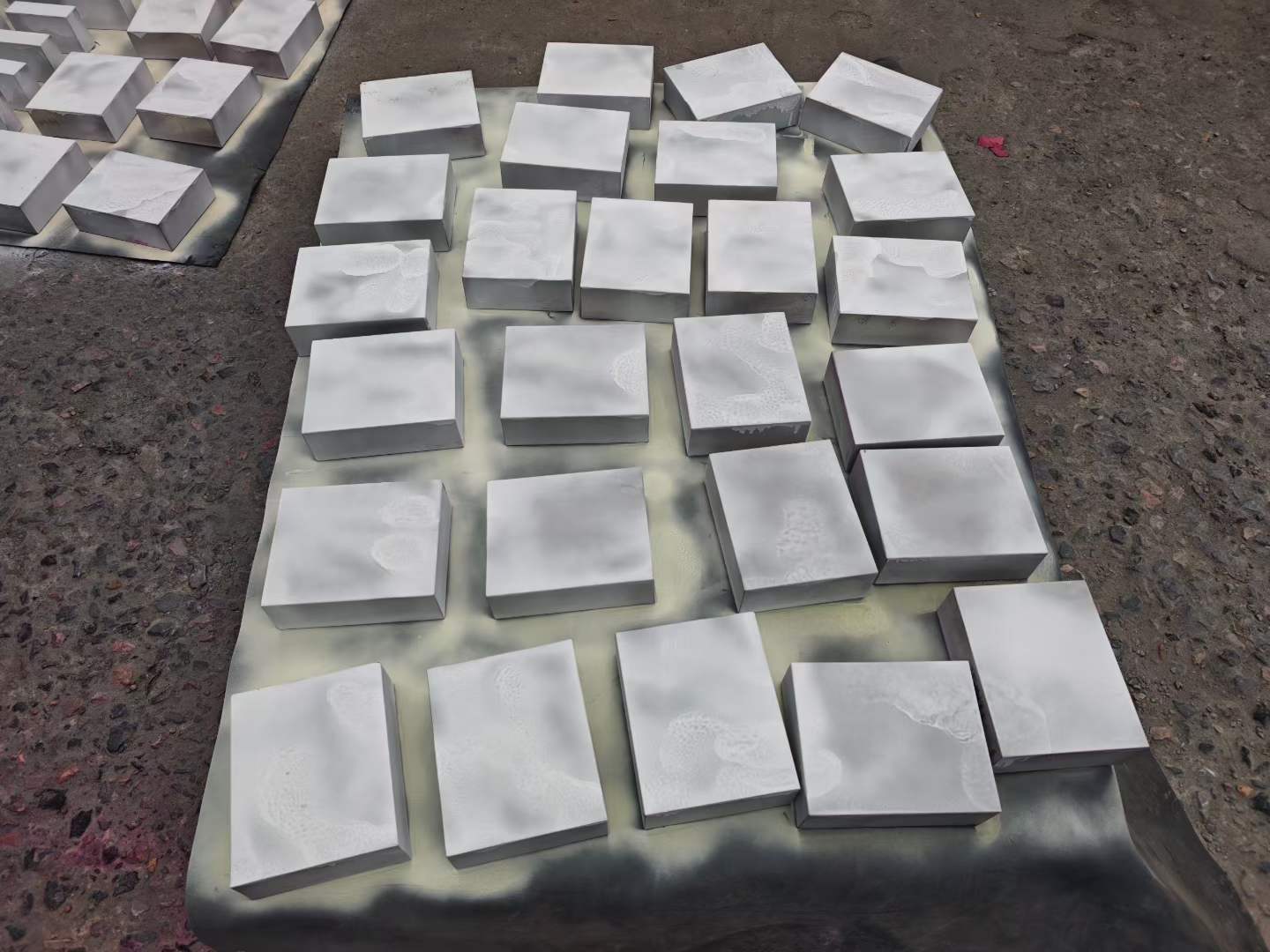
Forged and machined ring blanks — B 462 / B 564 formReactor vessels & columns for chemical processing dutyPulp & paper mill — bleach plant and digester duty
Ordering & Customisation Process
1
Specification Review
Send your MTO, drawing or project specification. We map every line item to the correct ASTM/ASME standard and product form.
2
Quotation & MTC Sample
You receive an itemized offer with mill test certificate data for the offered heats, so metallurgy is verified before you commit.
3
Production & Inspection
Material is produced or allocated from stock, with dimensional and surface inspection; third-party inspection can be witnessed on request.
4
Export Packing & Delivery
Sea-worthy export packing with full documentation set, shipped from Chinese ports under FOB, CFR or CIF terms.
Quality Control & Certification
Every shipment of Alloy C-276 leaves with a mill test certificate reporting the actual heat analysis and mechanical test results against the governing standard. Pressure-part material can be supplied under the ASME Code Case 1924 framework for code construction, and sour-service items are offered against NACE MR-0175 / ISO 15156 requirements. Third-party inspection by an agency of your choice can be arranged before dispatch, and heat numbers on the certificate are matched to stencilled or stamped markings on the delivered pieces so traceability survives the journey to site.
Why Buy Alloy C-276 from MESCO Steel
Nickel-Alloy Focus
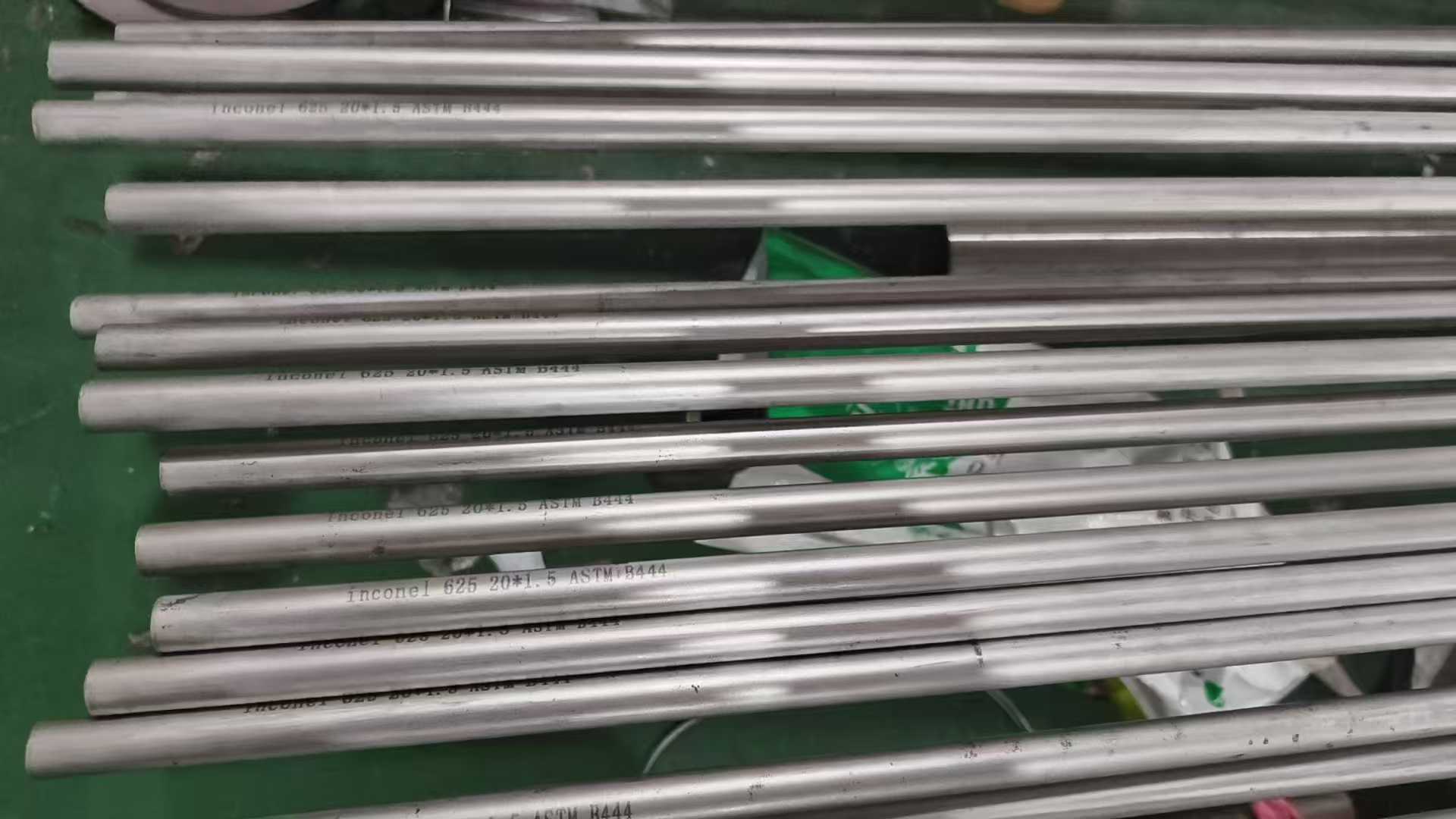
Alloy C-276 sits in our dedicated Alloy Steel line alongside Inconel 625 pipe and tube, so sourcing, inspection and logistics are handled by one specialist team.
Specification Discipline
Standards, heat numbers and certificates are matched line by line against your purchase order — no grade substitution, no silent equivalent.
Export Experience
Nearly two decades of export supply to chemical, energy and water-treatment projects, with export packing designed for long sea transits.
Responsive Engineering Support
Welding, forming and substitution questions are answered by engineers who work with nickel alloys daily, not by a call centre.
Frequently Asked Questions
Is Alloy C-276 the same as Hastelloy C-276?
Yes. Hastelloy is the registered Haynes International trade name; Alloy C-276, UNS N10276 and Werkstoff Nr. 2.4819 all designate the same 57% nickel–16% molybdenum–16% chromium composition with tungsten added. Mill certificates may use any of these designations.
Why does the 0.01% carbon limit matter for my fabrication?
At that carbon level, chromium-rich carbides cannot precipitate in the weld heat-affected zone, so the corroded grain-boundary network that affects higher-carbon C-type alloys does not form. In practice, most welded Alloy C-276 equipment goes into corrosive service in the as-welded condition, without post-weld solution annealing.
Can you supply sour-service (sour oil & gas) material?
Alloy C-276 is listed under NACE MR-0175 / ISO 15156 for H2S-containing environments. State the sour-service requirement at enquiry stage so heats and certificates are selected accordingly.
Which product forms can I order?
The ASTM family covers butt-weld fittings (B 366), forgings (B 462, B 564), bar and rod (B 574), plate, sheet and strip (B 575), welded pipe (B 619), seamless tube and pipe (B 622) and welded tube (B 626). Sizes and dimensional standards are confirmed against your project requirement at quotation stage.
What documents come with the material?
A mill test certificate with heat analysis and mechanical results accompanies every shipment, matched to piece markings for full traceability. Additional inspection or witnessing can be arranged before dispatch — tell us your documentation standard with the enquiry.
How do I get a quotation?
Send your specification, quantities and destination port through the inquiry button or to our sales team. Offers for Alloy C-276 are typically returned with certificate data within one working day of a complete enquiry.
Request an Alloy C-276 Quotation
Plate, tube, bar, forgings or fittings — send the specification and quantities, and our nickel-alloy team will come back with a line-item offer and certificate data.