Stainless Steel 304 vs 316 vs 430: Which Grade Fits Your Export Project?
304 vs 316 vs 430 stainless steel: which grade for your project?
Direct answer: use 304 as the default for general corrosion exposure and food contact; use 316 where chlorides dominate — coastal hardware, chemical processing, medical; use 430 for dry indoor panels and appliance trim where cost matters and slight magnetism is acceptable.
| Grade | Type / composition | Magnetic? | Corrosion behavior | Relative cost | Typical use |
|---|---|---|---|---|---|
| 304 | Austenitic, 18Cr-8Ni | No (may attract after cold work) | Good general corrosion, food-safe | Medium | Kitchen equipment, tanks, sinks |
| 316 | Austenitic + 2-3% Mo | No | Best-in-class chloride / marine resistance | Highest | Coastal fittings, chemical, medical |
| 430 | Ferritic, 16-18Cr (no Ni) | Yes | Good indoors; may stain outdoors long-term | Lowest | Appliance panels, trim, cookware base |
Cost logic
Nickel is the main price driver: 430 contains none, which is why appliance makers use 430 for visible panels and reserve 304 for wet zones. 316's molybdenum buys chloride resistance where 304 would pit.
MESCO supply
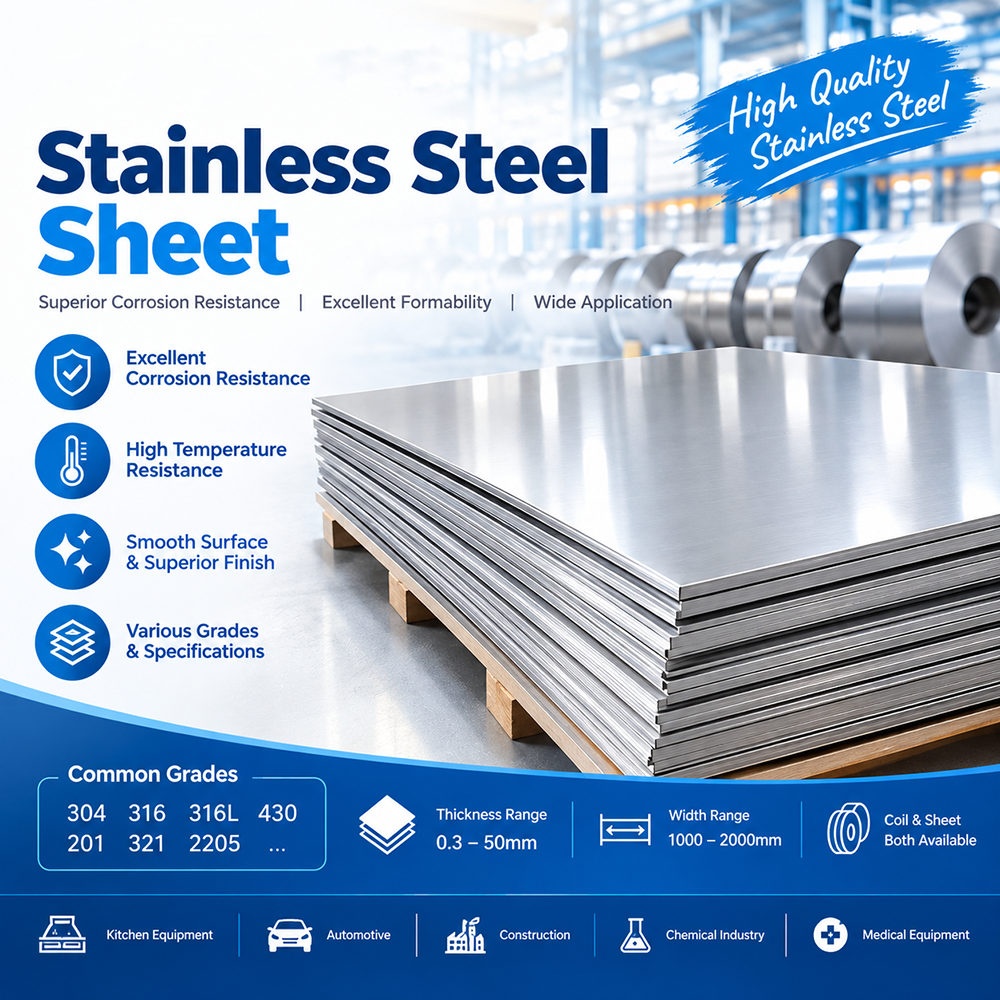
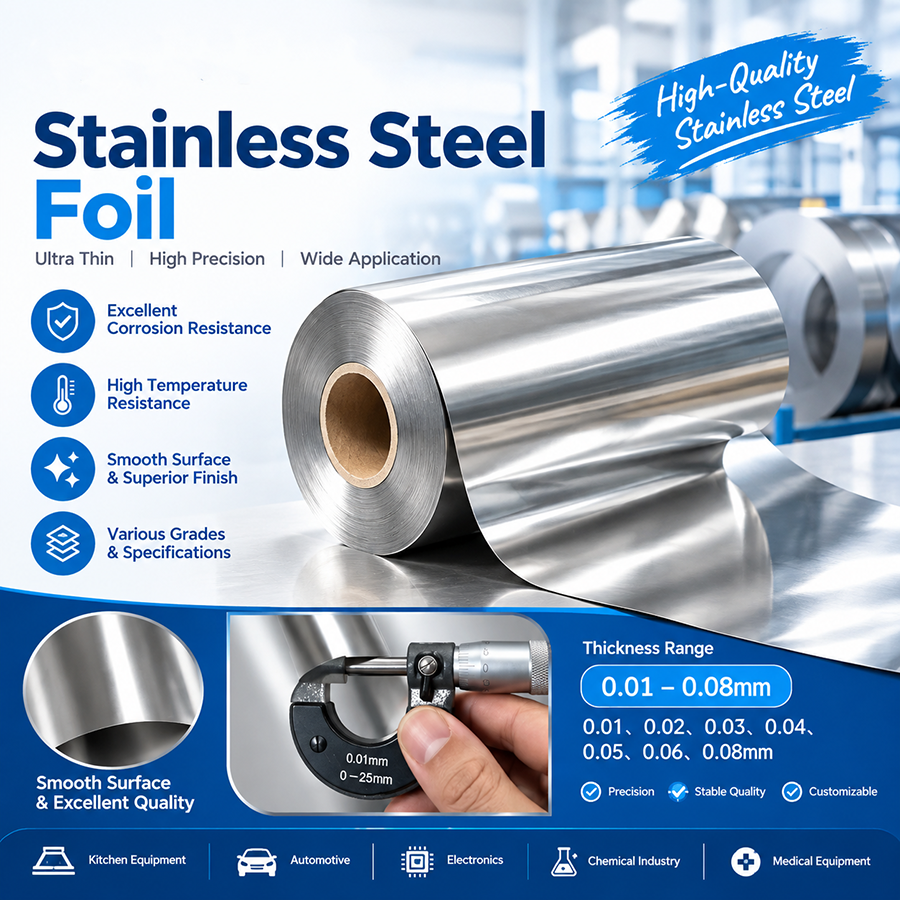
Stainless steel sheet and coil in 304/316/430 and related grades under the Stainless Steel category, with EN 10204 3.1 certificates per heat and export packing for coil or sheet.
Magnet test on site: strong magnet sticks to 430, not to 304/316 — a fast first check before the lab does.