
High Weather Resistance Laminated Steel Sheet for Solar Reflector Components
| Share | |
|---|---|
| Categories | Composite Steel Plate |
| Brand | MESCO: Trusted Steel Wholesale Manufacturer |
| Product Category | Laminated steel sheet |
| Application | Solar reflector components / CSP reflector assemblies |
| Substrate | Custom, on request |
| Sheet Thickness | Custom, on request |
| Surface Gloss | 200+ GU |
| Solar Reflectance | 80% and above |
| Accelerated Anti-Aging Test | 20,000 hours |
| Film Adhesion | Stable, resistant to peeling and chalking |
| Cut Sizes | Custom cut-to-size sheet |
| Supply Form | Sheet / coil |
| Origin | China (MESCO STEEL) |
High Weather Resistance Laminated Steel Sheets for Solar Reflector Components
A film-laminated steel sheet engineered as the reflective face of solar reflector assemblies. The sheet combines a steel substrate with a laminated reflective surface film, delivering solar reflectance of 80 % or higher and a specular gloss above 200 GU, validated by 20,000 hours of accelerated anti-aging testing. The laminated film holds its adhesion and stays resistant to peeling and chalking under sustained UV exposure, so the reflectance the reflector starts with is the reflectance it keeps. Substrate grade, sheet thickness and cut-to-size dimensions are customised to the reflector design.
- 20,000-hour accelerated anti-aging test validation
- Solar reflectance ≥80 %, surface gloss 200+ GU
- Custom substrate, thickness and cut-to-size sheet
Overview
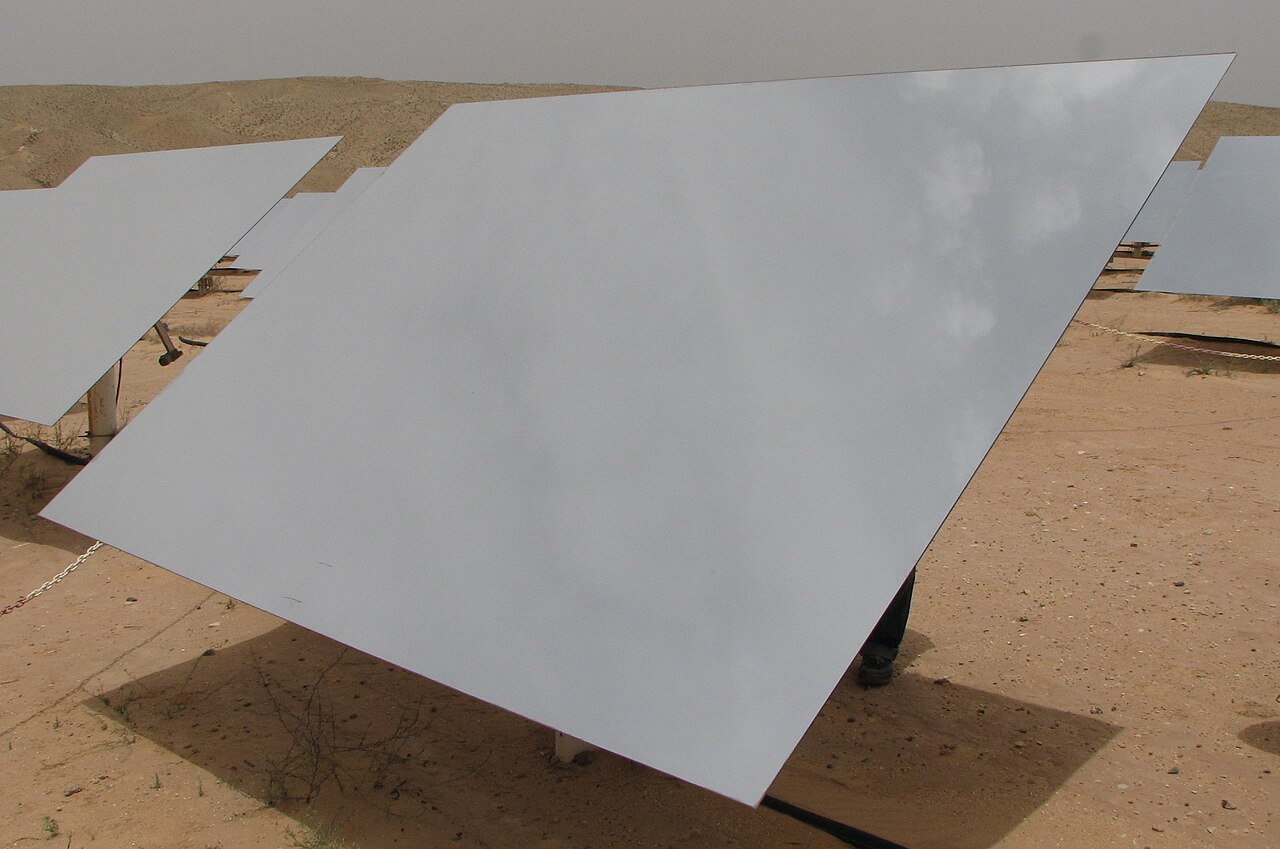
MESCO supplies high weather resistance laminated steel sheet as a reflector-facing material for concentrated solar power and solar thermal assemblies. The product is a laminated construction rather than a painted one: a reflective surface film is bonded to a steel substrate through an adhesive layer, so the optical surface and the structural backing are delivered as a single coil or sheet. That single-piece construction is what allows a reflector manufacturer to build a mirror panel, a parabolic trough facet or a heliostat face without separately handling a fragile glass mirror and its backing structure.
Solar reflectors are judged on how much sunlight they keep sending to the receiver, not only on how much they reflect on day one. Reflectance decays in service through film chalking, micro-cracking, adhesion loss along cut edges, and the surface hazing that follows repeated washing cycles in a dusty environment. Every performance figure quoted for this sheet — the 20,000-hour accelerated anti-aging result, the ≥80 % solar reflectance, the 200+ GU gloss, the peel and chalk resistance — is a statement about holding that optical performance over the service life of the field, which is where the maintenance budget of a solar plant is actually spent.
What Is a Laminated Steel Sheet for Solar Reflectors?
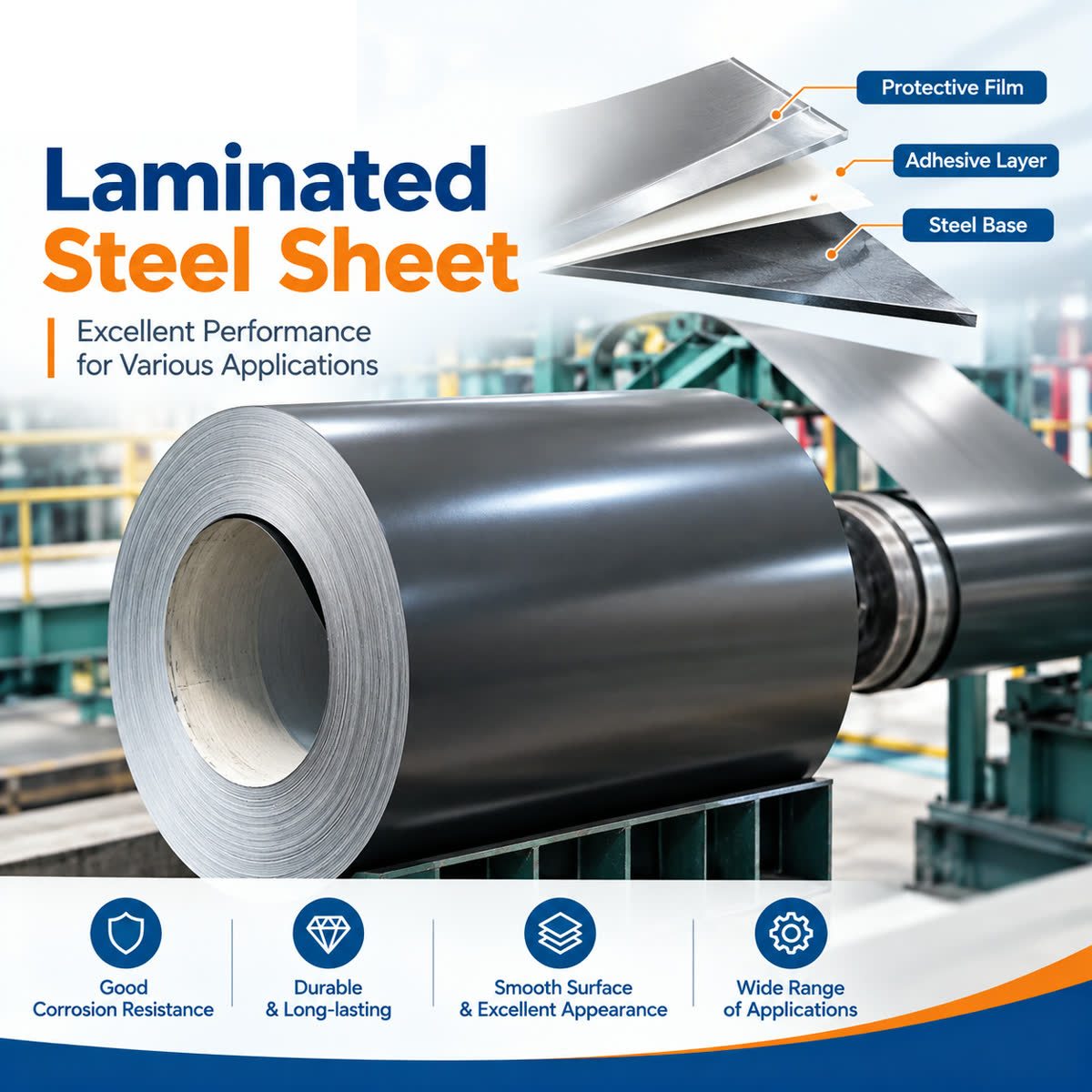
It is a composite flat product in which a reflective polymer film is laminated onto a steel substrate. The steel carries the mechanical duty: stiffness across the reflector aperture, wind load resistance, and the dimensional stability that keeps a facet flat. The laminated film carries the optical duty: specular reflection, gloss, and UV and weather resistance at the surface. Because the film is bonded rather than deposited, the sheet can be cut, formed and mounted using ordinary steel fabrication methods.
| Layer | Function | Specified as |
|---|---|---|
| Reflective surface film | Specular reflection, gloss and UV resistance at the optical face | Laminated film, 200+ GU |
| Adhesive layer | Bond between film and substrate; controls peel resistance and edge stability | Heat-activated lamination |
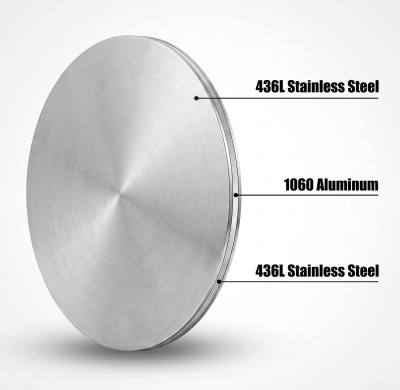
| Steel substrate | Stiffness, flatness, wind load resistance, mounting compatibility | Custom substrate |
| Thickness | Facet stiffness versus weight on the tracking structure | Custom, on request |
| Supply form | Fabrication-ready flat sheet for reflector assembly | Cut-to-size sheet or coil |
Key Features
20,000-Hour Anti-Aging Validation
Accelerated anti-aging testing to 20,000 hours is used to characterise how the laminated surface behaves under the UV dose, heat and moisture that a reflector accumulates over years of outdoor service — the basis for predicting long-term optical retention rather than short-term appearance.
Solar Reflectance ≥80 %
The reflective face delivers 80 % or better solar reflectance, the share of incident solar radiation returned by the surface. Higher reflectance translates directly into more energy reaching the receiver for the same aperture area.
Surface Gloss 200+ GU
A surface gloss above 200 GU indicates a highly specular finish. Specular reflection is what a concentrating collector requires: the beam must be aimed at the receiver, not diffused across the field.
Stable Film Adhesion
The bond between film and substrate is built to resist peeling and chalking through UV exposure and thermal cycling, protecting the cut edges and the sheet face where delamination would otherwise begin.
Custom Substrate, Thickness & Cut Sizes
Substrate grade, sheet thickness and cut-to-size dimensions are specified against the reflector design, so the material arrives matched to the aperture, the mounting pitch and the tracking structure it will be fixed to.
Why Laminated Construction Holds Up in the Field
In a reflective composite, the failure mode to design against is not breakage; it is gradual optical loss. A laminated film that begins to chalk turns a mirror into a diffuser, and reflectance falls even though the panel is still physically intact. Adhesion loss at a cut edge lets moisture ingress under the film, and a lifted edge propagates inward with each thermal cycle.
This sheet addresses both mechanisms at the layer level. The film is formulated for UV and weather exposure rather than for indoor appearance, and the adhesive system is selected so the film stays bonded across the temperature swings a solar field experiences between night and peak daytime conditions. The result is a reflective surface whose performance is specified in the same terms the plant operator measures it in: reflectance retained, washing frequency required, and reflector replacement deferred.
Accelerated Anti-Aging Test: What 20,000 Hours Establishes
Accelerated anti-aging testing compresses years of outdoor exposure into a controlled chamber cycle by intensifying the three stressors that degrade a reflector surface: ultraviolet radiation, temperature and humidity. A 20,000-hour result is a materials-level statement that the laminated film and its adhesive interface were tested well beyond the duration of a conventional qualification run, and that the film retains its adhesion and surface integrity across that envelope.
For a project engineer, the practical value of this data is comparison and risk reduction. It allows the laminated sheet to be evaluated against alternative reflector materials on a like-for-like durability basis, and it supports the maintenance and replacement assumptions that go into the operating cost model of a concentrating solar plant.
| Parameter | Value | What it means for the reflector |
|---|---|---|
| Accelerated anti-aging test | 20,000 hours | Durability envelope of the film and its adhesive bond |
| Solar reflectance | ≥80 % | Share of incident solar radiation returned to the receiver |
| Surface gloss | 200+ GU | Degree of specular reflection at the optical face |
| Film adhesion | Stable, peel resistant | Resists edge lift and delamination in service |
| Chalk resistance | Resistant to chalking | Slows the surface hazing that reduces reflectance |
| Substrate, thickness, cut size | Custom | Matched to the reflector and mounting design |
Reflectance and Gloss Are Not the Same Specification
Two numbers decide whether a reflector material is usable, and they measure different things. Solar reflectance describes how much of the incoming solar spectrum is returned by the surface. Surface gloss describes how much of that return is directed rather than scattered. A material can reflect well and still concentrate badly if its surface scatters the beam.
For a parabolic trough, a heliostat or a linear Fresnel reflector, only the specular component reaches the receiver. This is why a laminated sheet for reflector service is specified with both figures: ≥80 % solar reflectance and a surface gloss above 200 GU, giving the concentrating optics a beam to work with rather than a bright but diffuse panel.
Keeping those figures stable matters as much as reaching them. Dust, washing, UV exposure and thermal cycling all push a surface towards scattering. The film system on this sheet is selected for gloss retention under that duty, which is what keeps the optical efficiency of the field from drifting downward year after year.
Where It Is Used
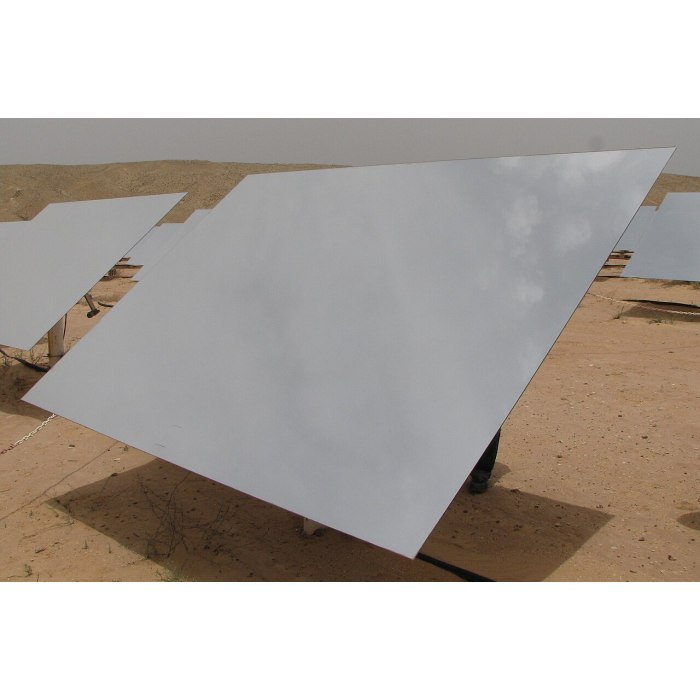
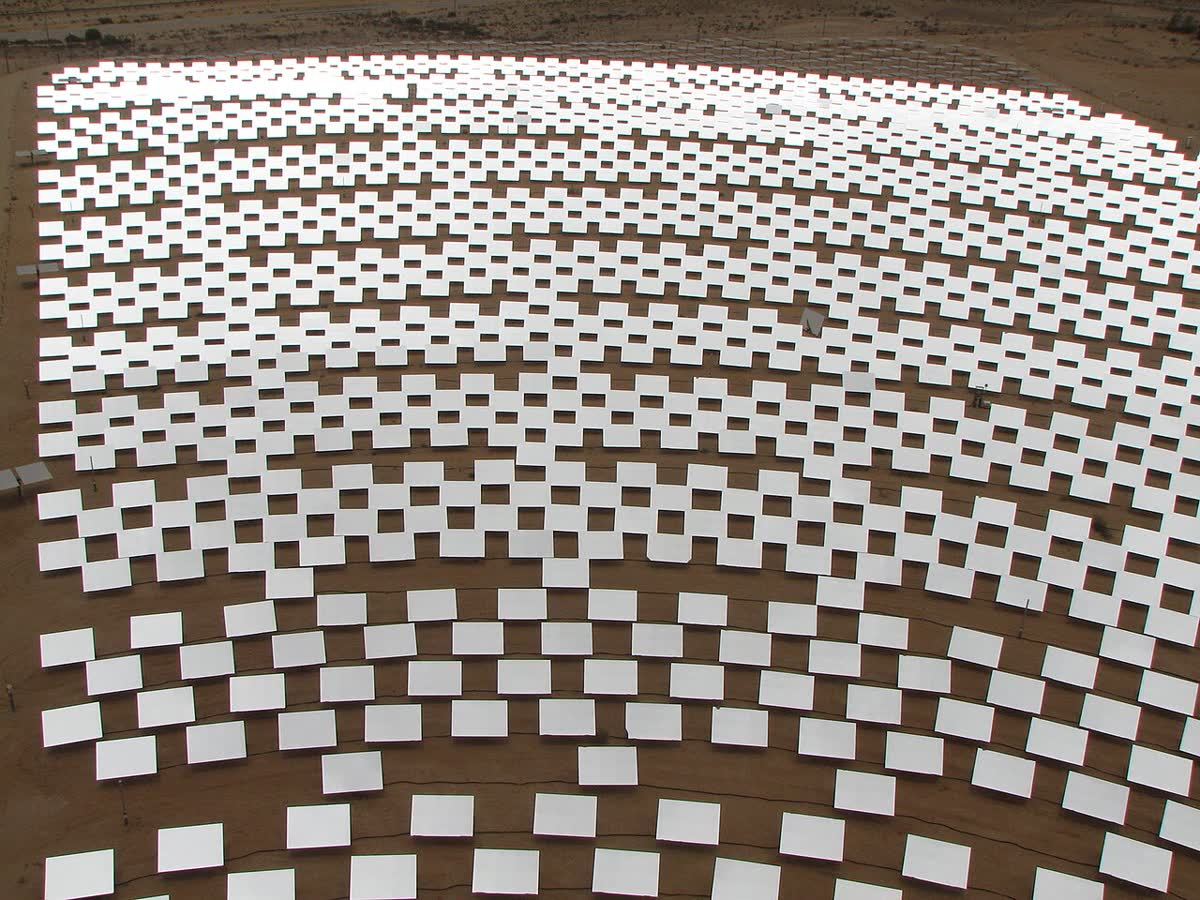
Laminated reflective steel sheet replaces glass mirror and separate backing structure in concentrating solar assemblies, which is where its combination of optical performance and ordinary steel handling pays off. The four applications below account for the majority of reflector demand.
Parabolic Trough Collectors
Reflective sheet formed into facet segments for line-focus trough assemblies, where sheet flatness and consistent gloss hold the focal line on the receiver tube.
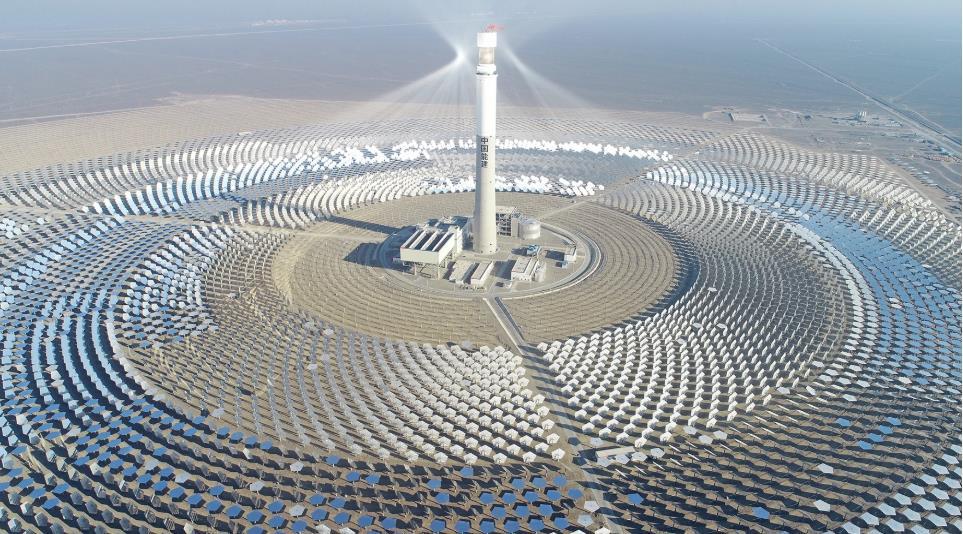
Heliostat & Tower Fields
Reflector faces for heliostats aimed at a central receiver, where large reflectors must stay accurately aimed under wind load and daily thermal cycling.
Linear Fresnel Reflectors
Compact, near-flat reflector strips where lightweight reflective sheet reduces torque demand on the tracking drives.
Solar Thermal & Process Heat
Concentrating assemblies for industrial process heat, desalination and solar thermal loops requiring durable reflective surfaces at scale.
Ordering and Customisation Process
Send Reflector Requirements
Provide the reflector type, aperture size, sheet thickness and required cut-to-size dimensions, along with the operating environment and expected service life.
Confirm Substrate and Film Specification
We match substrate grade, thickness and film specification to the design, and issue the datasheet covering reflectance, gloss, adhesion and anti-aging data.
Sample and Optical Verification
Samples are provided for forming, mounting and optical checks before the order is committed, so the material is validated on the actual reflector design.
Production, Cutting and Delivery
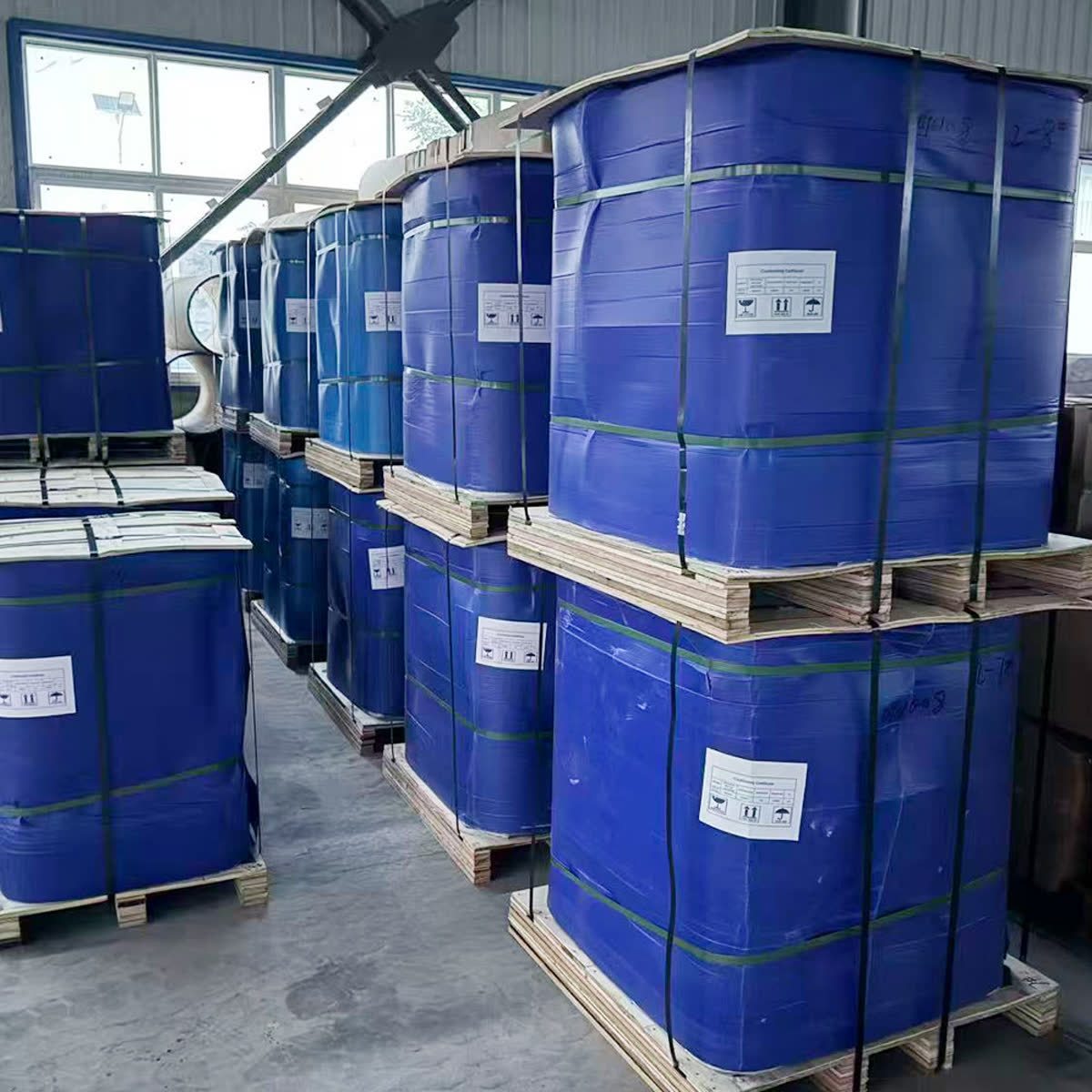
Coils are laminated, cut to size, and packed for export with edge and surface protection suited to seaborne transport and outdoor site storage.
Why Buy Laminated Reflector Steel from MESCO
19 Years in Coated Steel
MESCO has supplied coated and laminated steel for export markets since 2007, across steel, stainless and aluminium product lines.
Lamination In-House
Film lamination and cut-to-size processing are controlled at source, so film specification, adhesion quality and cut tolerances stay consistent batch to batch.
Datasheet Before Commitment
Documented reflectance, gloss and anti-aging data is issued with the quotation, so the material is specified on evidence rather than appearance.
Export-Ready Packing
Edge protection, moisture barrier and palletising designed for long sea freight and for site storage before installation.
Frequently Asked Questions
Is this a laminated steel sheet or a coated steel sheet?
It is a laminated sheet. A reflective film is bonded to the steel substrate with an adhesive layer, which is what delivers the 200+ GU specular surface while the steel carries the structural duty. Painted or coil-coated sheets use a different process and typically do not reach this gloss level.
What does the 20,000-hour accelerated anti-aging test cover?
It characterises the laminated film and its adhesive interface under intensified UV, heat and humidity. It is a materials durability result used to compare reflector materials and to support maintenance and replacement planning, not a direct calendar-equivalent service life.
Can the reflectance be verified for our project?
Yes. Solar reflectance and surface gloss are reported in the product datasheet, and samples can be supplied for independent optical verification on your own equipment before ordering.
What substrate, thickness and sheet sizes are available?
Substrate grade, sheet thickness and cut-to-size dimensions are customised per project. Send the reflector design and required flat sizes and we will confirm the specification that meets your stiffness, weight and mounting requirements.
Does the sheet resist peeling at cut edges?
The adhesive system is specified for stable adhesion and peel resistance. Because cut edges are the first place a laminated film can lift, edge protection is also applied to the export packing so the sheet arrives at the site with its edges intact.
Can it be formed into curved reflector facets?
The sheet is designed for fabrication into reflector panels. Confirm the required facet radius, forming method and bend direction with your enquiry so the substrate and film specification can be matched to the forming process.
Request Datasheet & Quotation
Send us your reflector type, aperture size, substrate and thickness requirements and the cut-to-size dimensions you need. We will come back with the datasheet covering solar reflectance, surface gloss, film adhesion and 20,000-hour anti-aging data, together with pricing and lead time.
- 加载中···

- Phone
- *Title
- *Content