High-Gloss Red PE Coated Aluminum Sheet for Fire Truck Bodies
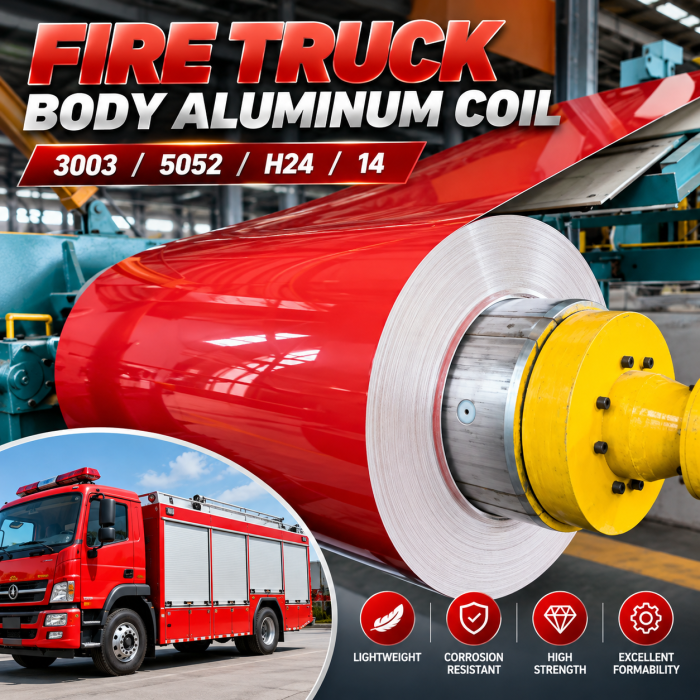
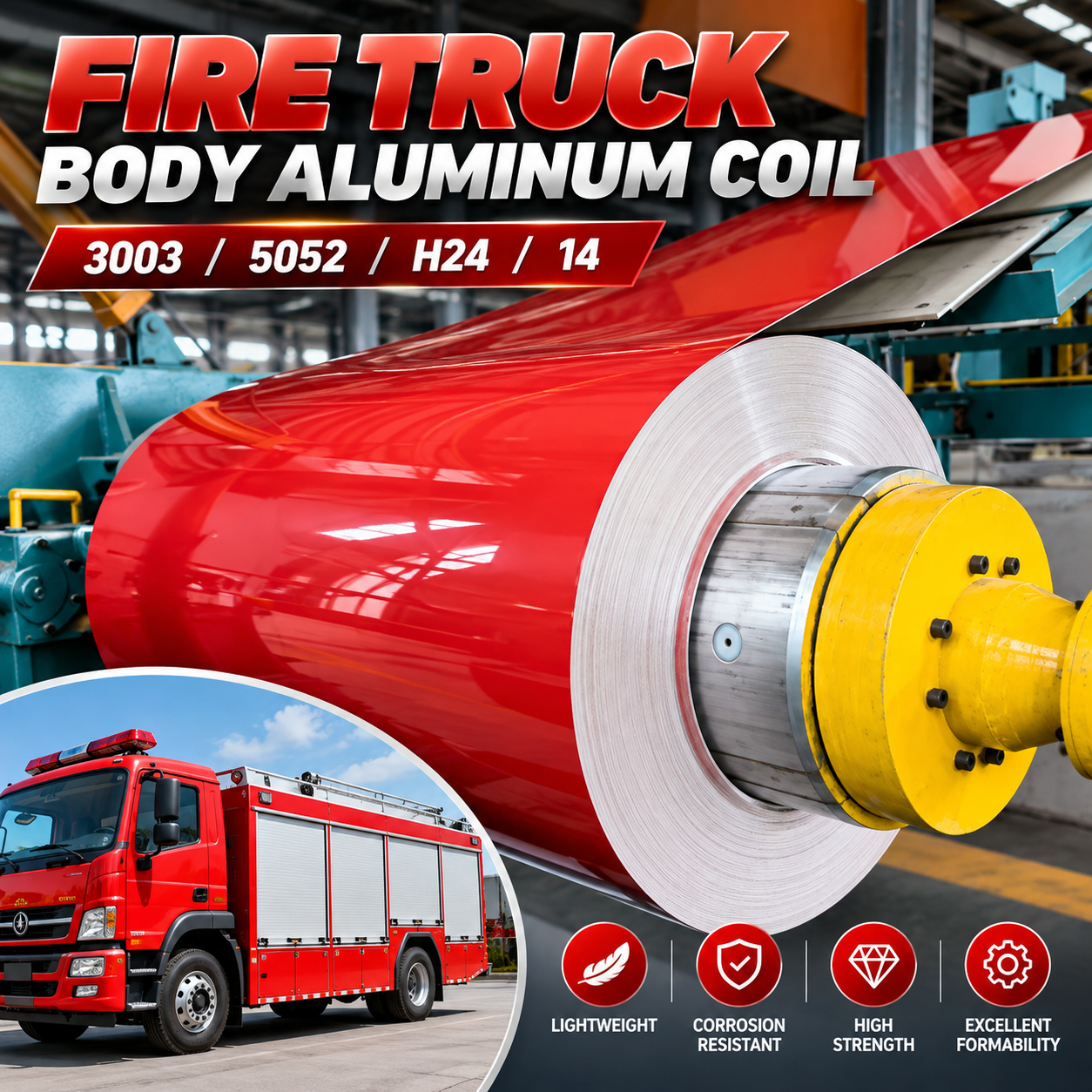
Polyester-coated high-gloss red aluminium sheet built for fire truck and fire appliance box bodies. Supplied in 3003 and 5052 alloy, H24 and H14 temper, at 2.0 mm and 2.2 mm thick with a PE coating film of 25 µm, guaranteed for 90° bending without cracking or coating failure, and controlled for colour difference from coil to coil.
90° bend guaranteed on 2.0–2.2 mm heavy-gauge sheet
High-gloss red with batch-to-batch colour difference control
Delivered as cut sheet, ready for shearing and folding
Overview
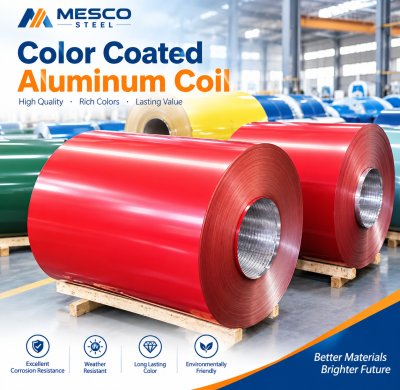
MESCO supplies high-gloss red PE coated aluminium sheet as the body-panel material for fire trucks and fire appliance box bodies. The material is a polyester-coated aluminium substrate: a 3003 or 5052 aluminium core in H24 or H14 temper, 2.0 mm or 2.2 mm thick, coated with a 25 µm polyester film in high-gloss red.
Three requirements drive this product, and all three are specified rather than assumed. The sheet must survive a 90° bend without the coating cracking or the aluminium tearing, which is what the forming of body panels, locker doors and equipment compartments demands. Colour must be held continuously, because a fire appliance body is assembled from many separate sheets that meet each other on the finished vehicle, and a colour difference between them is immediately visible. And the material is delivered as sheet rather than coil, cut to the required flat sizes so the fabricator can shear, fold and assemble without a separate decoiling and levelling step.
What Is PE Coated Aluminum Sheet for Fire Truck Bodies?
It is a colour-coated flat product. The aluminium core carries the mechanical performance — strength, stiffness and bendability — while the polyester coating carries the colour, the gloss and the surface protection. The two are applied and cured together so that the coating deforms with the metal during forming rather than sitting on top of it as a film that can crack or lift.
Fire appliance bodies are a demanding application for a colour-coated sheet because the panel geometry includes return flanges, folded edges and door returns. The 90° bend requirement is not a laboratory condition; it is what happens at nearly every fold line on the body. A coating that passes a low-strain flexibility test but fails at a tight fold will show as a white crack line along the fold, and that crack line becomes a corrosion initiation point in service.
Layer build-up of high-gloss red PE coated aluminum sheet
Layer
Function
Specified as
Polyester (PE) top coat
High-gloss red colour, surface protection, weather resistance
25 µm dry film
Pretreatment / conversion layer
Bond between coating and metal, adhesion through forming
The coating system is selected and cured so the sheet folds to 90° without coating cracking, flaking or metal tearing — the condition that governs every folded edge on a body panel.
High-Gloss Red Finish
A high-gloss red polyester top coat gives the body its finished appearance straight off the sheet, with no additional paint step on the fabrication line.
Colour Difference Control
Colour is controlled across the production run so that separate sheets meet on the assembled body without a visible shade step between panels or between successive deliveries.
Heavy Gauge for Body Panels
At 2.0 mm and 2.2 mm the sheet carries the stiffness a fire appliance body needs, so locker doors, compartment panels and skirts hold their shape in service.
Aluminium Corrosion Behaviour
The aluminium substrate resists atmospheric corrosion without a sacrificial metallic coating, so an exposed cut edge or a field scratch does not start the red rust that a coated steel panel would.
Supplied as Sheet
Sheets are cut to the flat sizes required by the fabricator, so the material goes straight to the shear and the press brake without an in-house decoiling and levelling operation.
Performance Parameters
The table below sets out the specification of the high-gloss red PE coated aluminium sheet supplied for fire truck body work. Alloy, temper, gauge and flat sheet size are confirmed against the body drawing before the order is released.
Item
Specification
Product category
High-gloss red PE coated aluminum sheet
Application
Fire truck body / fire appliance box body
Alloy
3003 / 5052
Temper
H24 / H14
Aluminum sheet thickness
2.0 mm / 2.2 mm
Width
1250 mm / 1500 mm / 1200 mm
Colour
High-gloss red
Coating type
Polyester (PE)
Coating film thickness
25 µm
Bend requirement
90° bend guaranteed, no cracking
Colour requirement
Colour difference controlled across the run
Delivery form
Sheet
Items such as flat sheet length, coil weight if coil is preferred, coating supplier, packing method, delivery lead time and minimum order quantity are produced to order. Please confirm them with your enquiry rather than assuming them from this page.
Alloy and Temper Selection
Two alloy families are offered for this application, and the choice follows the forming severity and the strength the body panel needs.
Alloy
Temper
Where it is selected
3003
H24 / H14
The general-purpose choice for fire truck body panels, compartment doors and skins where a balance of formability, strength and cost is required.
5052
H24 / H14
Selected where higher strength and better fatigue and corrosion performance are wanted, for example on structural panels and heavily worked sections of the body.
Both alloys are aluminium-magnesium or aluminium-manganese families, both are readily folded and both take the polyester coating in the same line. Confirm the alloy against the structural drawing, because the panel stiffness the body designer assumes is tied to the alloy and temper combination as well as to the gauge.
Colour Control and Coating Performance
Colour difference is the second requirement on this product, and it is a manufacturing control rather than an inspection that happens at the end. A fire appliance body is assembled from many separate panels, so the sheets that end up adjacent on the finished vehicle must read as one colour under daylight. On a high-gloss red surface the eye detects even small differences, because gloss amplifies any shift in shade.
Control works on three levels. The coating batch is matched to the approved colour reference before the run starts. Film thickness is held at the specified 25 µm, because film thickness itself shifts the apparent shade on a gloss finish. And the coated sheet is compared against the reference through the run rather than at the end, so a drift is caught while it can still be corrected on that coil rather than discovered after the sheets have been cut.
Where a body builder is matching an existing fleet colour, we work against a supplied colour reference or sample. Where the colour sits at the limit of what a polyester system reproduces on a gloss surface, we say so and offer the nearest achievable shade rather than deliver a panel that will not match.
The 90° Bend Requirement
The 90° bend is the requirement that decides whether this sheet works on a body at all. A fire appliance body is built from folded panels: skins returned at the edges, locker doors with folded returns, compartment liners with formed flanges. At 2.0 mm and 2.2 mm, the sheet is stiff enough for the duty but thick enough that a marginal coating will crack at a tight fold.
Three variables decide whether the fold is clean. The alloy and temper set how much the metal itself will stretch before it tears. The coating system and its cure set how much extension the film will take before it cracks. And the bend radius the fabricator uses sets how concentrated the strain becomes at the fold line. We control the first two and confirm the third with the customer, because a 90° bend over a tight radius is not the same duty as a 90° bend with a generous inner radius.
In practice the material is supplied so that a 90° fold on the specified gauge produces no coating crack, no flaking and no visible crazing along the fold line. Where a specific inner radius is called up on the drawing, tell us at enquiry stage so the alloy, temper and coating combination can be confirmed against it.
Applications
The material is used wherever a fire appliance body is built from coated aluminium sheet that must fold cleanly and hold a consistent red finish across the whole vehicle.
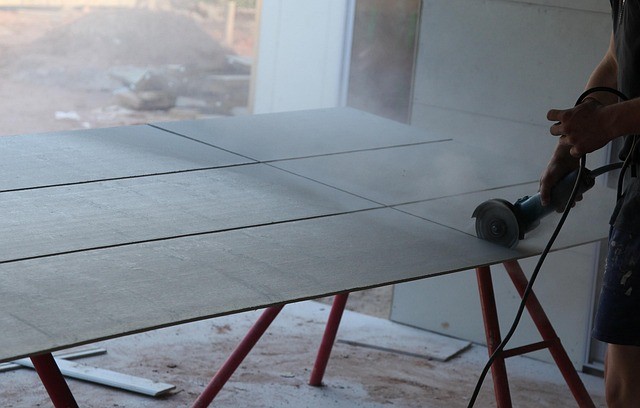
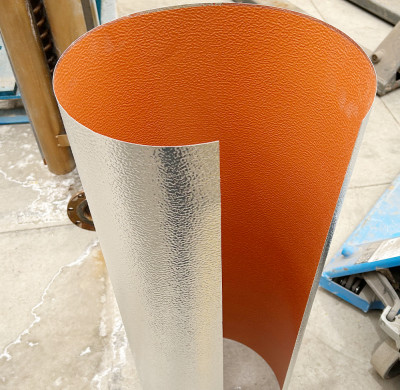
Coated body panel surfaceSheet cut and formed by the fabricator
Fire truck body skins — the outer panels of the box body, folded at the edges and assembled onto the frame.
Equipment compartment doors and liners — folded doors and internal liners that need a clean bend and a colour-matched face.
Locker and locker-bay panels — storage bays along the body, where adjacent panels must match in colour.
Fire appliance skirts and lower body panels — heavy-gauge panels exposed to handling and road spray.
Rescue and special-purpose vehicle bodies — other emergency vehicle box bodies built on the same coated-sheet principle.
General fabrication in the emergency-vehicle supply chain — folded parts where a 90° bend and tight colour control are specified together.
Delivery Form and Export Packing
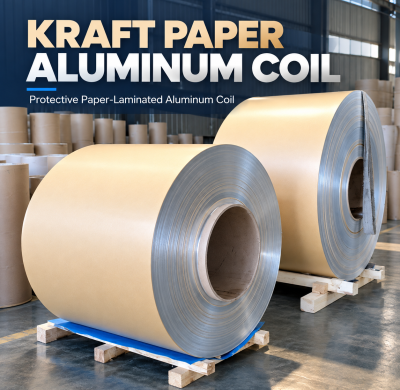
This product is supplied as sheet. The coil is cut to the flat sizes the fabricator needs, so the material arrives ready for shearing and folding rather than as a coil that has to be decoiled, levelled and cut in-house first. That removes a process step from the body builder's line and removes the risk of the coating picking up handling marks during an extra pass through levelling equipment.
Packing is arranged for sea freight, with sheets stacked flat, interleaved and protected at the edges, then banded on pallets or in crates so the coating face is not abraded in transit and the pack does not shift in the container. The pack is identified so the specification travels with the material to the job. Tell us your required flat sheet size, the coating face that must be protected, and the destination port, and we will confirm the packing arrangement with the quotation.
Quality Control
Incoming aluminium is verified for alloy, temper, gauge and flatness before coating.
Coating film thickness is controlled and checked at the specified 25 µm through the run.
Coating adhesion is inspected so the film holds through forming rather than lifting at a fold.
Bend performance is verified against the 90° requirement on the specified gauge.
Colour is compared against the approved reference during the run, not only at final inspection.
Cut sheet is checked for flat size and edge condition, then packed and identified before shipment.
Where your project calls for third-party inspection, a specific test report or a colour reference signed off at the pre-production stage, we can arrange the inspection scope together with the order.
Why Choose MESCO for Fire Truck Body Aluminum Sheet
Coating and Cutting in One Supply Chain
Coating and sheet cutting are handled together, so the flat size, the coating build and the colour are matched to the body drawing rather than sourced from separate suppliers.
Specification-Led Release
Gauge, alloy, temper, colour and bend requirement are confirmed against the drawing before the order is released, with records prepared for the shipment.
Colour Treated as a Controlled Variable
High-gloss red is controlled through the run so adjacent panels on the assembled body read as one colour, instead of being checked only as a final appearance item.
Export Packing Experience
Sheet is packed for sea freight with the coated face protected and the pack secured, which suits long transit routes and multi-handling deliveries.
Frequently Asked Questions
What alloy is used for fire truck body aluminium sheet?
MESCO supplies this product in 3003 and 5052 alloy, in H24 and H14 temper. 3003 is the general-purpose choice for body panels and compartment doors, and 5052 is selected where higher strength and better fatigue and corrosion performance are needed. The correct alloy follows the structural drawing of the body.
Is the 90° bend guaranteed on 2.2 mm sheet?
Yes. A 90° bend without coating cracking is a specified requirement of this product, and the alloy, temper and coating combination is selected to achieve it on the 2.0 mm and 2.2 mm gauges. If your drawing calls up a specific inner bend radius, tell us at enquiry stage so the combination can be confirmed against it.
How is colour difference controlled between panels?
Colour is controlled on three levels: the coating batch is matched to the approved colour reference before the run, film thickness is held at the specified 25 µm because thickness shifts the apparent shade on a gloss finish, and the coated material is compared against the reference through the run. This is what keeps adjacent panels consistent on the assembled body.
Is the material supplied as coil or as sheet?
It is supplied as sheet. The coil is cut to the flat sizes your fabricator requires, so the material arrives ready for shearing and folding without a separate decoiling, levelling and cutting operation. Coil supply can be discussed if your line prefers it.
What coating system and film thickness are supplied?
The standard system is polyester (PE) at a dry film thickness of 25 µm in high-gloss red. Polyester is well suited to a body panel that is formed after coating, because it combines the flexibility the 90° bend demands with the colour and gloss the finished vehicle needs.
What information do you need to quote this product?
Please send: alloy and temper, gauge, flat sheet size, colour reference, required bend radius, quantity, packing preference and destination port. With those details we can confirm the specification, the packing and the delivery schedule.
Request a Quotation for High-Gloss Red PE Coated Aluminum Sheet
Send us your alloy and temper, sheet gauge, flat sheet size, colour reference, the bend radius your body drawing calls up, and the destination port. We will confirm the specification, the coating system, the packing and the delivery schedule.